Serving Phoenixville
Sump Pump Installation in Phoenixville
Call us for a free sump pump installation estimate
Serving Phoenixville
Call us for a free sump pump installation estimate
A sump pump is the active part of many basement waterproofing systems in King of Prussia. Water collects below the floor in a basin, the float activates the pump, and the discharge line sends that water outside before it can rise onto the slab.
Older pits are a common weak point. Some are too shallow, uncovered, missing a check valve, tied to a short hose, or powered by a pump that was installed long before the basement was finished. During a Schuylkill Valley downpour, that setup can cycle constantly and still leave water near the wall-floor joint.
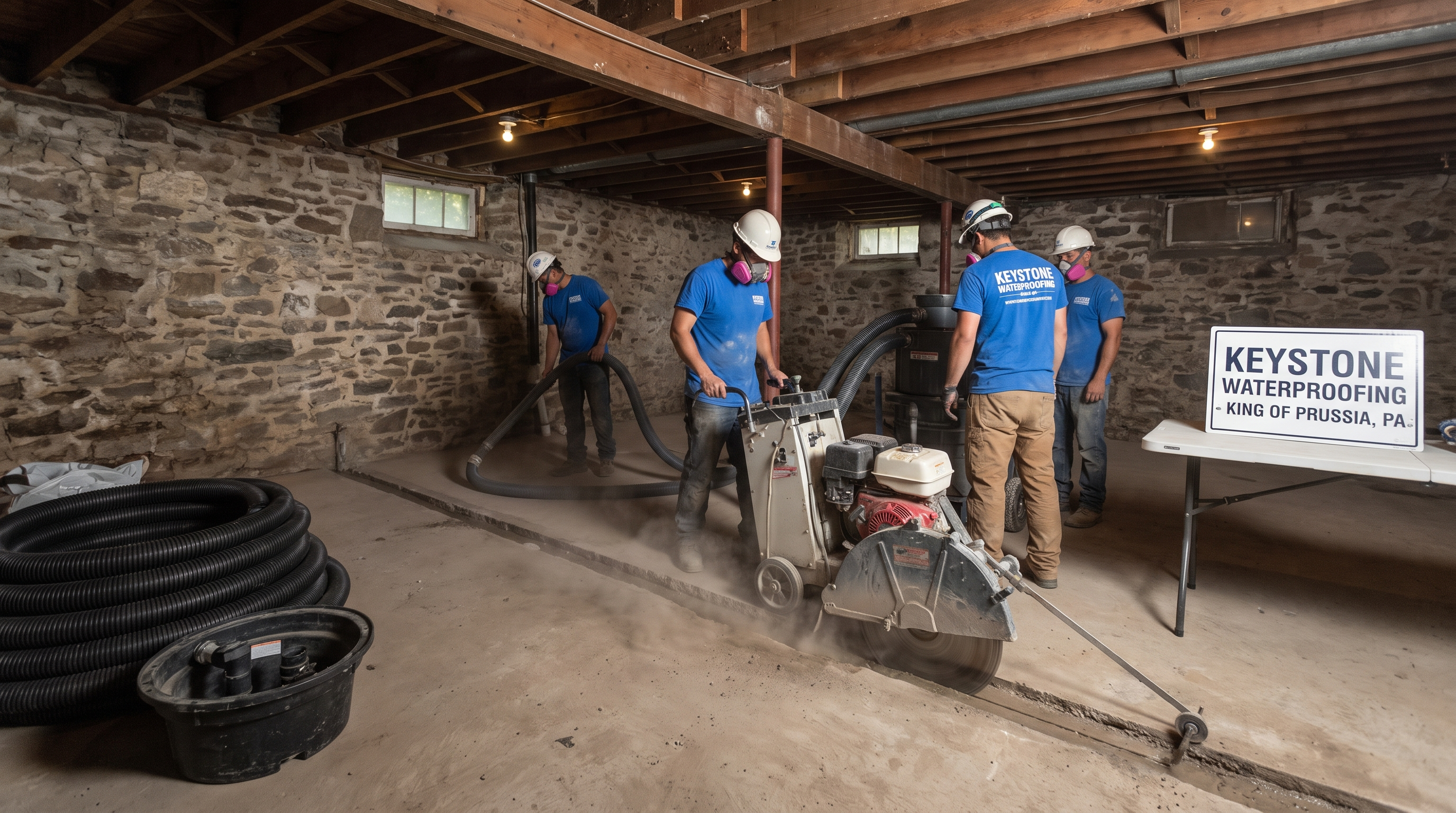
A proper sump pump installation looks at the whole system. Basin size, pump horsepower, float reliability, lid sealing, check valve placement, discharge pipe diameter, freeze protection, electrical supply, alarm options, and battery backup all matter. The pump also needs to work with any interior drain tile feeding the pit.
Finished basements raise the stakes. Carpet, drywall, trim, furniture, electronics, and mechanical systems can turn a short pump failure into a major cleanup. The right estimate should explain whether the current pit can be reused, whether a new basin is needed, and where the water will discharge outside.
Phoenixville sits near the Schuylkill River and French Creek, with older borough homes, twins, former mill-era housing, and newer developments around the edges. Heavy storms can raise groundwater, overload yard drainage, and send water into basements through cracks, wall bases, window wells, and weak sump systems.
A Phoenixville waterproofing plan should distinguish between recurring seepage and larger storm or flood exposure. Interior drain tile and sump pumps can control water entering the foundation system, while exterior grading, downspout extensions, window well drains, and backup pumping may be needed to reduce repeat pressure.
Homes with partially finished basements or storage areas should not wait until the next large event to investigate musty odors, efflorescence, or damp lower walls. A written scope should identify the source, system design, discharge route, and what the repair is expected to handle.
A small replacement pump may be cheaper up front but fail during the storm that matters. The contractor should consider drain tile connections, groundwater rate, basin capacity, and vertical lift.
A sump line that dumps next to the foundation can recycle water back into the basement. The estimate should show a practical route that moves water away from the structure.
Get the pump checked before heavy rain and power strain arrive together.
Free — no obligations